Why Patwon Ki Haveli Is Jaisalmer’s Ultimate Golden Mansion

Explore Nathmal Ki Haveli Jaisalmer: History & Architecture
September 9, 2025
Sam Sand Dunes Jaisalmer: Desert Safari & Camping Guide
September 28, 2026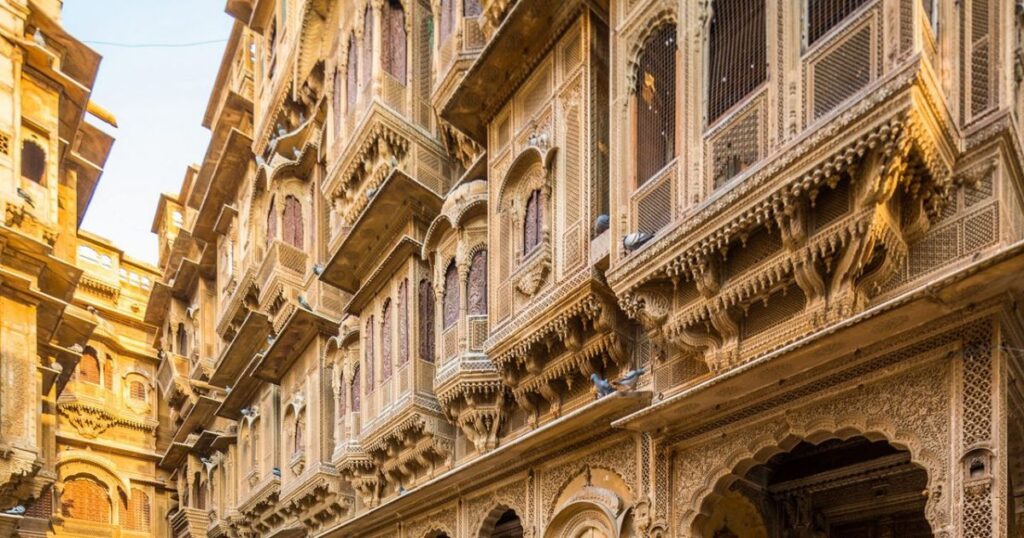
Rising like a mirage out of the Thar Desert, the city of Jaisalmer glows with a uniform, warm amber hue. Every structure seems to tell a tale of mediaeval trade, resilient dynasties, and unparalleled craftsmanship. While the towering Jaisalmer Fort captures your attention from miles away, the true heart of the city’s architectural brilliance is hidden within its narrow, winding lanes. Among the many grand residences built by wealthy merchants, patwon ki haveli stands unmatched.
This architectural marvel is not just a building; it is a cluster of five grand mansions built side-by-side. It serves as an extraordinary testament to the sheer wealth, artistic ambition, and societal influence of the nineteenth-century merchant class in Rajasthan. If you want to experience the zenith of stone carving and architectural extravagance, patwon ki haveli jaisalmer is your ultimate destination.
Unraveling the Rich Patwon Ki Haveli History
To truly appreciate the grandeur of this structure, one must delve deep into the fascinating patwon ki haveli history. The construction of this massive complex began in 1805 under the orders of Guman Chand Patwa, a phenomenally wealthy merchant of his time. The Patwas were elite traders who dealt in gold, silver, fine brocades, and expensive embroidery thread—which explains the term Patwa. Legend has it that they also amassed immense riches through banking and opium trading, stretching their business network across central Asia and parts of Europe.
Guman Chand Patwa wanted to build something monumental for his five sons. He envisioned a residential complex where each son would have his own distinct, opulent mansion. The construction process was so extraordinarily detailed and ambitious that it took over fifty years to complete. Artisans worked continuously for five decades to hand-carve the yellow sandstone blocks into delicate, lace-like structures.
As time marched on and maritime trade routes developed, the overland trade routes that made Jaisalmer rich began to decline. The Patwa families eventually abandoned the mansions to move to bigger commercial hubs like Mumbai and Ahmedabad. For decades, the buildings stood silent in the desert wind until the government intervened. Today, parts of the complex are managed by the Archaeological Survey of India (ASI) and state authorities, ensuring that the legacy of Patwon Ki Haveli’s history remains alive for travellers from around the world.
Architectural Splendor: A Symphony in Sandstone
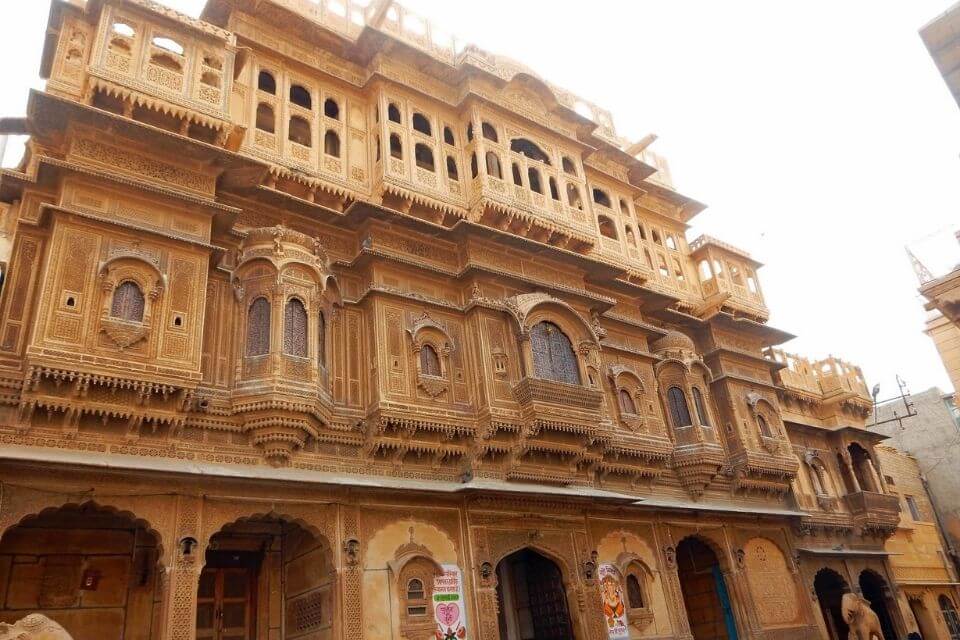
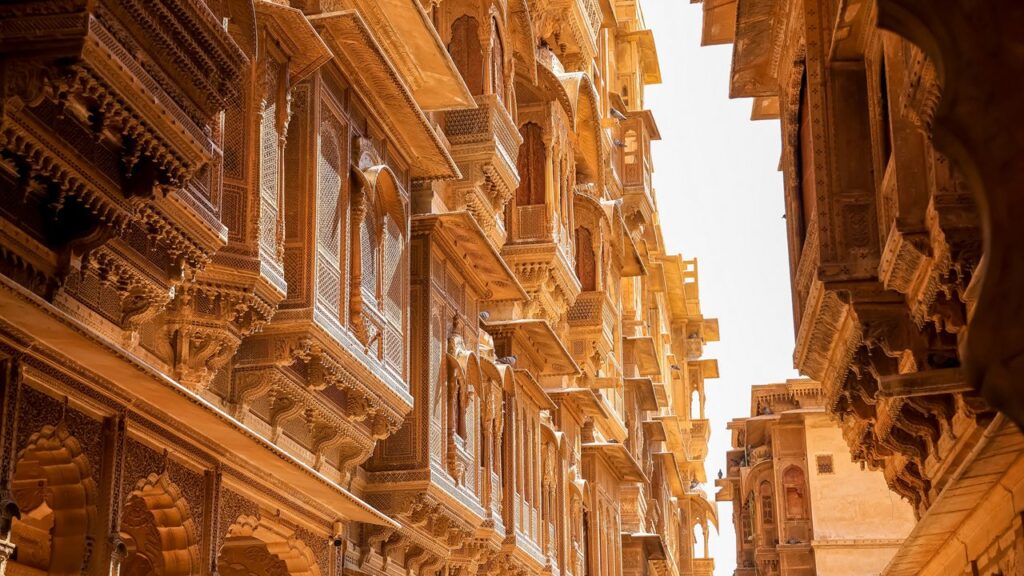
The moment you step into the courtyard facing Patwon Ki Haveli, the sheer scale of the facade takes your breath away. Built entirely out of local yellow sandstone, the building seems to radiate its own internal light. The architecture is a flawless blend of traditional Rajput elements and intricate Islamic design patterns, creating a unique regional style.
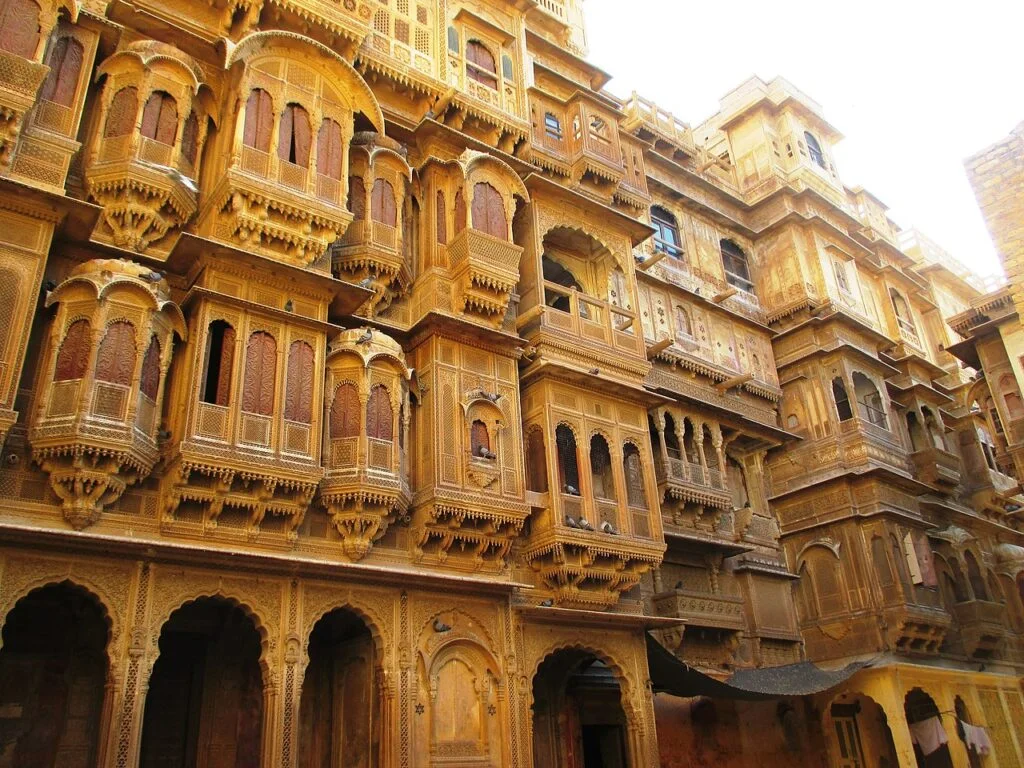
What makes Patwon Ki Haveli, Jaisalmer, the ultimate golden mansion is its collection of over sixty distinct balconies (jharokhas). Every single balcony is a masterclass in geometry and stone masonry. The lattices (jali work) carved into the stone windows are so fine that they look more like woven lace than solid rock. These lattices served a dual purpose: they allowed women of the household to view the bustling streets below without being seen, and they created a natural cooling system by channelling wind through small apertures, dropping the indoor temperature significantly during harsh desert summers.
Inside the mansions, the opulence does not slow down. The complex features majestic archways, pillared corridors, and private courtyards that segment the property. The walls are adorned with beautiful, faded frescoes that showcase traditional Rajasthani royalty, floral motifs, and geometric patterns. In some rooms, you can still catch the glint of gold-leaf paintings and intricate mirror work (Sheesh Mahal style) that once sparkled under the light of massive crystal chandeliers.
A Detailed Look Inside the Five Mansions
The complex of Patwon Ki Haveli is essentially five independent houses connected through common pathways and matching structural designs. Each haveli has its own personality, depending on which son lived there and how the space has been conserved today.
The First Haveli (Kothari’s Patwa Haveli)
This is the grandest, most meticulously restored, and most famous section of the entire complex. It was purchased by a private businessman named Kothari, who transformed a major portion of it into a private museum. As you wander through its multi-storeyed layout, you can view a treasure trove of artefacts belonging to the nineteenth-century elite.
- The Living Spaces: Rooms are staged with period-accurate furniture, silver utensils, royal hookahs, and traditional garments.
- The Business Room: A special section displays the original safes, ledgers, and accounting desks where the Patwas conducted cross-continental trade.
- The Terrace: Climbing to the roof provides an astonishing panoramic view of the Jaisalmer Fort cutting into the blue sky.
The Remaining Four Havelis
The other four structures offer a more raw, rustic experience. Two of them are under the care of government authorities and house local arts and crafts departments. Here, you can find old musical instruments, ancient coins, and traditional textiles. The remaining sections feature small antique shops where local vendors sell authentic leather goods, embroidered carpets, and traditional jewellery, allowing you to take a piece of the city’s artistic heritage home with you.
Comparing Jaisalmer’s Iconic Architectural Landmarks
While patwon ki haveli is arguably the crown jewel, Jaisalmer boasts several other historic residences. Understanding how they compare highlights why this particular complex stands out as the ultimate mansion.
| Haveli Name | Built-in | Unique Feature | Vibe & Experience |
| Patwon Ki Haveli | 1805 | A cluster of 5 houses; 60+ carved jharokhas | Pure architectural luxury and historical depth |
| Nathmal Ki Haveli | 1889 | Built by two architect brothers; asymmetrical design | Quirky, intricate stone carvings of modern objects like bicycles |
| Salim Singh Ki Haveli | 1815 | Distinctive peacock-shaped roof structure | Striking and unusual silhouette, though less expansive inside |
Planning Your Visit to Patwon Ki Haveli Jaisalmer
To get the most out of your visit to Patwon Ki Haveli, Jaisalmer, keeping a few travel logistics in mind will make your journey smooth and memorable.
- Timing: The haveli is open daily from 9:00 AM to 6:30 PM. The absolute best time to visit is during the golden hour—either early morning or late afternoon. As the sun strikes the yellow sandstone at an angle, the entire mansion glows like burnished gold, offering the perfect backdrop for photography.
- Hiring a Guide: It is highly recommended to hire a local certified guide at the entrance. The maze of rooms can be confusing, and having someone point out the subtle nuances of patwon ki haveli history, secret safes, and hidden cooling ducts enriches the experience enormously.
- Footwear: Wear comfortable walking shoes, as you will be climbing steep stone staircases across multiple floors to reach the upper terraces.
Beyond the Mansion: Completing Your Jaisalmer Adventure
While exploring the architectural wonders inside the city walls takes up your day, no trip to this golden paradise is truly complete without experiencing the vast, untamed beauty of the Thar Desert.
Town Exploration (Havelis & Fort) ──> Evening Transit ──> Thar Desert Dunes (Camping & Safaris)
After soaking in the cultural history of patwon ki haveli, you should head out into the sand dunes to spend a night under the stars. Booking a night at a luxury Jaisalmer desert camp allows you to experience traditional desert hospitality. Imagine sitting around a roaring bonfire amidst rolling sand dunes, watching local artists perform folk dances, and eating authentic Rajasthani cuisine like Dal Baati Churma.
To add a dash of thrill to your itinerary, make sure to set aside a day for various Jaisalmer desert activities. You can ride a camel across the crests of the Sam Sand Dunes during sunset, go dune bashing in an open-top 4×4 vehicle, or rent a quad bike to zoom across the vast desert expanses. Combining the architectural brilliance of the city’s golden mansions with the adrenaline of the open desert creates a well-rounded travel experience that you will remember for a lifetime.
Why Patwon Ki Haveli Remains Unmatched
Among all the historic monuments scattered across Rajasthan, patwon ki haveli holds a truly special place. It doesn’t represent the defensive power of kings or military generals; rather, it celebrates the creative vision of everyday artisans and the sheer ambition of pioneering merchants. Every square inch of the sandstone walls tells a story of global trade, familial pride, and timeless beauty. It stands proudly as Jaisalmer’s ultimate golden mansion, waiting to reveal its centuries-old secrets to anyone who walks through its grand wooden gates.